B.E. Electrical & Electronics Engineering
B.E. Electrical & Electronics Engineering
B.E. Electrical & Electronics Engineering overview
B.E. Electrical & Electronics Engineering (Accredited by NBA)
As an eminent fact, we cannot imagine the world without electricity, and nowadays, the electrical and electronic devices have become an essential and inevitable part of our daily lives. The EEE Department endeavors to stream line the career options and paves ways for recent graduates to explore new career opportunities. The Department focus is to train our students to get strong academic knowledge in the frontier areas of both Electrical and Electronics Engineering and also to make the students ready to face real-world challenges. The Department has taken up the task of developing competent Electrical Engineers of high quality, capable of facing various challenges of the power situation in the country. The department aim of providing both fundamentals and Industry/ Future ready programs in this field by nurturing the students to deep-dive in their fields of interest and also motivating them to excel. Today, the role of a department is not only to pursue academic excellence but also to motivate and empower its students to be lifelong learners, critical thinkers, and productive members of an ever-changing global society.
The department also provides facilities to carry out research in the emerging technology areas.In addition to class room teaching, the students are guided and motivated to practically implement the principles learnt in classroom through experimentation in the laboratories which help them gain confidence and become skilled engineering professionals. We focus on bridging the gap between campus education and industry needs through internships, guest lectures and workshops. Department produce graduates with the necessary background and scientific skills to work professionally in several fields in particular with Power sectors and IT Industries. We continue to play a leading role in our discipline which leads us towards creating innovative and effective professional graduate community which would vivacious and provide continuous learning. On the whole, we are committed towards creating and erecting professional graduate community which is vivacious and provides continuous learning.
Resource Shortcuts
Vision
To manifest itself as a valuable global resource for industry and society with strong foundation. Abetting the students with innovative ethical and creative talents of endeavoring young professionals in Electrical and Electronics Engineering.
Mission
M1: Educate the students to acquire knowledge in recent advancement of Electrical and Electronics Engineering and prepare the students for professional career and higher studies. M2: Inculcate the students to develop innovation for the societal needs through research oriented teaching and creative skill enhancement training. M3: Enunciate the students with better skills to meet the challenges of the technical world and intensify the skills towards the practical approach.
Program Educational Objectives (PEOs)
PROGRAM EDUCATIONAL OBJECTIVES (PEOs) PEO 1: Graduate will be able to execute the principles of basic science, mathematics and engineering fundamentals necessary to formulate, solve and analyze engineering problems. PEO 2: Graduate will be able to accrete the knowledge for pursuing advanced degrees in Engineering, Science, Management, Research and Development. PEO 3: Graduate will be able to effectuate professionalism, leadership qualities, self and continuous learning and concern for environment to meet the societal needs. PROGRAM SPECIFIC OUTCOMES (PSOs)
Program Specific Outcomes (PSOs)
PSO1: Graduates will acquire the knowledge of design, performance & testing of static & dynamic Electrical Machines, Electrical Drives, Power Electronics applicable in core and related fields. PSO2: Graduates will attain knowledge and acquire skills by applying modern software tools for design, simulation and analysis of Electrical Systems to successfully adapt in multi-disciplinary environments.
Programme Outcomes (POs)
HOD's Message
"“Engineers are the creators of the New World” As an eminent fact, we cannot imagine the world without electricity, and nowadays, electrical and electronic devices have become an essential and inevitable part of our daily lives.The EEE Department endeavor to streamline the career options and paves ways for recent graduates to explore new career opportunities. Today, the role of a department is not only to pursue academic excellence but also to motivate and empower its students to be lifelong learners, critical thinkers, and productive members of an ever-changing global society. We focus on bridging the gap between campus education and industry needs through internships, guest lectures and workshops.Department produce graduates with the necessary background and scientific skills to work professionally in several fields in particular with Power sectors and IT Industries. We continue to play a leading role in our discipline which leads us towards creating an innovative and effective professional graduate community that would vivacious and provide continuous learning.On the whole, we are committed to creating and erecting a professional graduate community that is vivacious and provides continuous learning."
Centres of Excellence
Laboratories & Facilities
Lab Spaces & Study Environments

Research Disclosures
Core Department Faculty Profiles
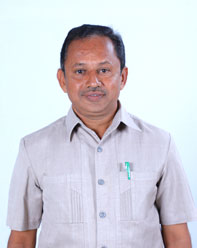
N P Ananthamoorthy
Professor & Head
R Rajesh Kanna
Associate Professor
B Nandhini
Associate Professor
MP Viswanathan
Associate Professor
G Muthuram
Associate Professor
K Vanmathi
Associate Professor
S Joshua Daniel
Assistant Professor
K Saravana kumar
Assistant Professor
A Khaja Najumudeen
Assistant Professor
N Maheshkumar
Assistant Professor
G Arundass
Assistant Professor
N Maheswari
Assistant Professor (General Engineering)
M Daniel Pradeep
Assistant Professor (General Engineering)